


SXU Students Gain Hands-On Birth to Three Experience
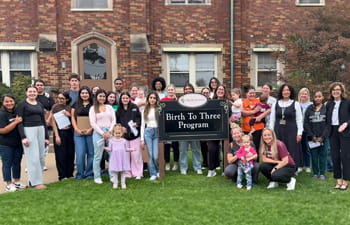
Saint Xavier University (SXU) psychology professor LaTreese Hall, Ph.D., recently collaborated with Lori Winkler, director of SXU's Birth to Three program, for a hands-on field study, where students connected what they've learned in class to real children and families.
"My research focuses on early child development, and I first heard about Birth to Three in a passing conversation about a building just off campus that might interest me. The timing was right. I had just built partnerships with the Children's Museum in Oak Lawn and Mercy Circle for other units and field studies, so I was excited to add one more. I reached out to Lori over the summer. She invited me for tea, in the tradition of the Mercy Mission, and it turned into a beautiful two-hour conversation about child development and education!" said Hall.
Hall aimed for students to have a hands-on experience in the unit, and Birth to Three helped them to see many aspects of early development and family life. Students rotated through five stations, spending 10-15 minutes at each and conducted structured observations of children, examined a range of toys, and evaluated how each supports cognitive, physical and psychosocial development. They also held conversations with people they may never have spoken with before, including parents, pregnant individuals, and early childhood professionals and educators.
"Many of my students are interested in careers that involve child development, so practicing structured observation is directly relevant skill-building. They also spoke with current employees and the program's director about their work and career paths. Some students were inspired enough to ask about internships at Birth to Three," said Hall.
Hall and Winkler ensured SXU's mission was at the forefront of the experience. The visit connected students to service, compassion, and the common good by helping them to learn alongside a program that supports mothers, babies and families in the local community.
After the experience, Hall surveyed students, and the response was strongly positive. They gave high ratings for enjoying the experience and for connecting course concepts to real children and families. Students valued hearing directly from mothers and watching children play, and several noted that the textbook matched what they saw in real life.
"Families shared that their experience was positive and expressed their willingness to participate again. Moms enjoyed the interaction and reported that the students had really good questions! Birth to Three staff agreed that the students' reflections demonstrate they aren't just absorbing instruction - they have internalized the program's value," said Winkler.
Given the overwhelmingly positive response from students and families and the connection it forged between classroom learning and the local community, Hall and Winkler plan to continue the experience in future semesters.
"For 22 years, the Birth to Three Program has focused its mission-aligned grant on increasing awareness and remaining responsive to families and community experiences. We have learned that data only tells part of the story. The lived experiences of our families, students and community members are the ultimate measure of our success. We value opportunities to keep these vital conversations going," said Winkler.