BBA in Cybersecurity Administration
Learn How to defend against attacks in the Digital World
It has become incredibly cheap to automate constant digital attacks against any individual, Fortune 500 corporation, or government system. As a result, we now live in a world where we can assume that everyone is constantly at risk of attack from advanced cyber threats.
This new paradigm has led to a boom in cybersecurity careers. According to LightCast, cybersecurity professionals earn a median salary of $103,000, with entry-level positions starting at $68k. There are approximately 663,430 unfilled positions in the U.S. alone.
Why Earn Your BBA in Cybersecurity?
Within the Cybersecurity program, students will assess modern cybersecurity challenges that threaten our privacy, security, and safety and gain both the knowledge and hands-on technical skills to protect digital assets from cyber criminals who leverage sophisticated social and cyber tactics to facilitate attacks.
As the cyber attack surface continues to expand via the proliferation of Internet of Things (IoT) devices, it is increasingly vital that students learn how to "harden" networks, systems, and endpoint devices against cyberattacks, topics which are covered in the course Modern Cybersecurity.
It is, however, impossible to create a perfectly secure system, so students will also learn how to perform cyber forensics to investigate, collect, and preserve digital evidence associated with a breach.
Finally, students will learn how to think like a "hacker" and use industry standard tools to find weaknesses in systems.


AccrediTation

AACSB-accredited schools are trailblazers in teaching, research, and societal impact. Our business school quality standards are always evolving, with our most recent change underscoring the importance of positive societal impact in business education. AACSB's standards are principles-based and easily adaptable to new educational models, ever-changing business needs, diverse workforce and lifelong learner demands, and the fast pace of new and emerging technologies.
About the Program
Our Cybersecurity major is designed with two goals in mind:
- To ensure that students stay one step ahead of evolving cyber threats.
- To provide students with fundamental IT skills.
While the first goal is primary and more foundational to a cybersecurity program,
the importance of the second goal should not be disregarded for two major reasons.
First, entry-level cybersecurity roles, as well as roles at smaller organizations,
frequently blend elements of cybersecurity and IT work. Second, the cybersecurity
function of an organization is inextricably linked with IT since both networks and
team members present opportunities to bad actors. To that end, students who complete
the recommended IT focus area will be prepared for numerous cybersecurity certifications,
including the CompTIA A+ exam.
Students who complete this curriculum will not only be prepared for a career as a
cybersecurity professional, but they will also be well-positioned to obtain a number
of certifications, which will increase their employability later in their careers,
including Certified Ethical Hacker, Certified Information Systems Security Professional, and Certified Forensic Examiner. Please note that these certifications may require additional work experience and
exam preparation.
Subject Matter Experts
Randy Rovesti is a professor of information science technology at Penn State New Kensington, as well as an engineering manager at the Naval Nuclear Laboratory, where he focuses on both physical and digital security systems. His expertise on both the academic and professional side of cybersecurity made him uniquely qualified to be the primary designer of the Cybersecurity program, as he possesses both a strong theoretical foundation and the day-to-day experience of putting experience into practice. Rovesti holds a master's degree in IT from Carnegie Mellon University.
Charles Severance, Ph.D., holds a doctorate in computer science from Michigan State University. He is the former executive director of the Sakai Foundation and one of the world’s leading online computer science educators. His contributions and curriculum form the basis of our programming curriculum.
Professional Advisors
Alexey Malashkevich is a highly respected engineer and engineering manager with strong experience in building cloud-based financial technology systems. His skill in building engineering teams gives him particular insight into the skills most valuable in today's technology workforce. His experience in cloud-based FinTech provides him with tremendous experience in understanding the cybersecurity needs of organizations which face particularly heavy attacks. Malashkevich is the former CEO of Agile Code, a software development firm, and has 20 years of experience bringing software products to market.
In addition to Malashkevich, we consulted with two cybersecurity experts who asked not to be named here due to the highly sensitive and public nature of their roles.
Curriculum Committee Membership
|
Member |
Organization |
Notes |
|
Noel Broman |
Purdue Global |
Academic representative |
|
Maury Hillstrom |
Marymount California University |
Academic representative |
|
Louis McHugh |
Illinois Institute of Technology |
Academic representative |
|
Yasser Alginahi |
Adrian College |
LCMC representative |
|
Mohammed Ouali |
Adrian College |
LCMC representative |
|
Randy Rovesti |
Naval Nuclear Laboratory |
Academic and Industry representative |
|
Arij Johri |
Guidepoint Security |
Industry representative |
|
Steve Aráuz |
Accenture Federal Services |
Industry representative |
|
Staford Titus |
Breachlock Inc |
Industry representative |
|
Andrew Smeaton |
Afiniti |
Industry representative |
|
Avishai Avivi |
SafeBreach |
Industry representative |
|
Federica Kreitzer |
Nord Security |
Industry representative |
- Weekly Activity - Students will complete an activity for each week of class designed as a formative assessment to drive mastery of course concepts.
- Labs - Students will complete a range of labs intended as formative assessments targeted toward building key skills required for work in cybersecurity.
- Quizzes - Students will complete bi-weekly quizzes to ensure engagement with and retention of course materials.
- Projects - Each course contains one or more projects designed as a simulacra of real work. Students will be tasked with deploying their newly built skills toward solving real-world problems.
- The student will display critical thinking and problem-solving skills in relation to a wide range of cybersecurity challenges.
- The student will be able to analyze and investigate cyberattacks and their aftermath.
- The student will display the ability to communicate technical concepts to both technical and non-technical stakeholders effectively.
- The student will be prepared to adapt to emerging threats within their field.
- CCFE: Certified Computer Forensics Examiner
- There are no work experience requirements for the CCFE exam. The exam consists of two parts, a traditional multiple-choice, true/false, and multiple-answer examination and a take-home practical exam. The multiple-choice exam consists of 50 questions randomly pulled from a master list of questions.
- CEH: Certified Ethical Hacker
- The CEH exam is a four-hour, 125 multiple-choice exam. The work experience requirements for CEH vary depending on a student's chosen path to obtaining certification. If a student completes EC-Council Training, they can take the exam without going through the application process. Without EC-Council Training, a student needs at least two years of work experience.
- CISSP: Certified Information Systems Security Professional
- To qualify for this cybersecurity certification, students must pass the exam and have at least five years of cumulative, paid work experience in two or more of the eight domains of the (ISC)² CISSP Common Body of Knowledge (CBK). While students will not have the professional experience to qualify for CISSP, the curriculum has been created to cover the relevant topics for this exam.
Why should prospective students choose SXU for their degree?
- The online courses, developed by top cybersecurity practitioners, deliver in-demand knowledge and skills.
- Small class sizes allow for close interaction with professors and student colleagues.
- Students will develop the habit of lifelong learning, ready to manage in the essential cybersecurity industry.
- Saint Xavier University's core values of service, integrity, and excellence, critically important in today's technological world, support student development as an asset to employers and the community.
SXU's accelerated BBA+MBA Dual Degree program combines a four-year Bachelor of Business Administration and a two-year Master of Business Administration into a five-year program. Students complete 120 credit hours of undergraduate coursework and 30 credit hours of graduate coursework to fulfill the dual BBA+MBA degree. Students may take up to 12 credit hours of MBA coursework concurrent with their undergraduate coursework during their senior year.
Students are encouraged to apply to the 4+1 program in their junior year. Upon acceptance, students may register for courses at the graduate level with permission from the director of the Graham School of Management and the director of the MBA program. The BBA degree is awarded after successful completion of all undergraduate requirements. The MBA degree is awarded upon successful completion of the graduate requirements.
For more information, please contact the MBA program director Chris Perez at at jcperezFREESXU to set up an appointment.
Quick Links
Request Information
Want to know more about graduate programs at Saint Xavier University? Please fill out the form below!
Contact the Office of Admission
- 773-298-3050
- Toll Free: 844-GOTO-SXU (844-468-6798)
- Fax: 773-298-3076
- Email: admissionFREESXU
- M-F: 8:30 a.m. to 4:30 p.m.








BBA Program Director

Alex King
BBA Program Director
Phone: 773-298-3632
Email: akingFREESXU
Meet the Faculty

Josh Anderson
Assistant Professor
Phone: 773-298-3614
Email: janderson@sxu.edu
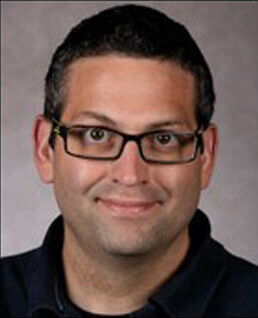
Vincent Cicchirillo
Associate Professor
Phone: 773-298-3633
Email: cicchirillo@sxu.edu

Paris Davis
Adjunct Faculty
Phone:
Email: pdavis@sxu.edu
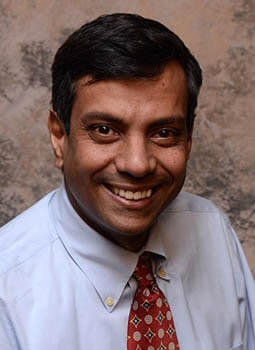
Indranil Ghosh
Dean
Phone: 773-341-5015
Email: ghosh@sxu.edu
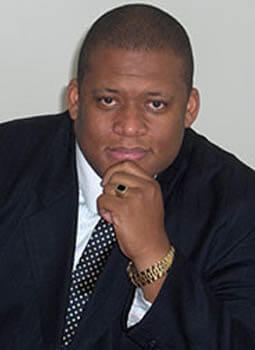
Brian Hill
Associate Professor
Phone: 773-298-3680
Email: bhill@sxu.edu
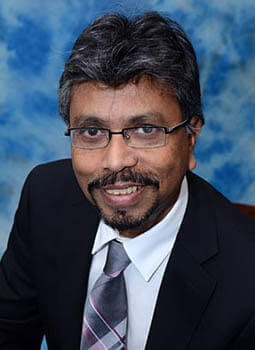
Monzurul Hoque
Professor
Phone: 773-298-3616
Email: hoque@sxu.edu
Alexander King
Assoc Prof/BBA Director
Phone: 773-298-3632
Email: aking@sxu.edu

Cheryl Luczak
Associate Professor
Phone: 773-341-5014
Email: luczak@sxu.edu

Hamid Mohammadi
Professor
Phone: 773-298-3621
Email: mohammadi@sxu.edu

David Parker
Associate Professor
Phone: 773-298-3664
Email: dparker@sxu.edu

Chris Perez
Director of MBA Program
Phone: 773-298-3605
Email: jcperez@sxu.edu
Faisal Rahman
Professor
Phone: 773-298-3606
Email: rahman@sxu.edu