BBA in Project Management
Become the Skilled manager of Projects Organizations need
Project managers work closely with colleagues to drive organizational success through
effective and efficient management of projects. Every organization needs skilled project
managers, so career opportunities are numerous and growing. In a rapidly evolving
business environment driven by digital transformation, traditional project management
has changed dramatically in recent years. SXU's BBA in Project Management will prepare
students for these changes. While covering the basics of project management, they
will also learn about the complex organizational and interorganizational environments
in which projects operate, different project approaches that can be applied depending
on the context, and an overview of the impact of technology on the project manager
role. This will equip them to apply their judgement to adapt to changing circumstances.
SXU’s Mercy mission is the foundation of the BBA in Project Management curriculum,
which means students also grow into wise and compassionate leaders, supporting human
dignity and the common good. As your career progresses, your responsibilities and
influence will grow from managing day-to-day operations to overseeing strategic activities,
like directing complex projects and setting long-term objectives.
Why Earn Your BBA in Project Management?
Project managers are among the highest-paid professions in the United States - with a median salary of $116,000 - according to research conducted by Northeastern University. Furthermore, according to research performed by the Project Management Institute, employers will need to fill an average of 2.2 million new project-oriented roles each year through 2027. Additionally, there is a tremendous shortfall in project management talent, which might result in a loss of over $208 billion GDP globally.
Clearly, this indicates a dramatic gap in project-oriented role training, which the Project Management major is intended to fill. The Project Management major will prepare students for a role as a project manager or technical project manager upon graduation and provide them with a solid footing to pursue a role as a program manager as they advance in their careers. It will provide students with skills in project management, product development and basic programming.


AccrediTation

AACSB-accredited schools are trailblazers in teaching, research, and societal impact. Our business school
quality standards are always evolving, with our most recent change underscoring the
importance of positive societal impact in business education. AACSB's standards are
principles-based and easily adaptable to new educational models, ever-changing business
needs, diverse workforce and lifelong learner demands, and the fast pace of new and
emerging technologies.
About the Program
Upon completion of the Project Management program, students will have acquired key skills and knowledge essential to starting their careers in project management. More specifically, by the end of the PMM IV course, students will be eligible to sit for the Certified Associate in Project Management (CAPM) exam, having completed the requisite 23 hours of formal education. This is a significant milestone in any project manager's career path, as this globally recognized certification from the Project Management Institute (PMI) will not only increase their employability but will also broaden their professional opportunities.
The CAPM certification opens up opportunities for higher-level project management roles, enhanced salary prospects, and the potential for international work. Given the global demand for project managers, a CAPM certification can serve as a powerful credential, making you stand out in the job market. Moreover, achieving this certification demonstrates a commitment to the profession and signifies a solid foundation of knowledge that can be highly attractive to employers.
Subject Matter Experts
Dr. Bob Barnes' career spans a period of over 30 years working in new product development across a broad range of industries and disciplines, including pharmaceuticals, medical devices, information technology, energy, automotive, and construction. Barnes is a former project management instructor and director of business development at Duke University’s Pratt School of Engineering.
Mala Chandra developed multiple core Java technologies, including J2EE, J2ME and Java Beans. In 2004, she was named one of the 25 most influential women in the development of the internet. She has developed courses in gamification, social media and other subjects for the University of Washington.
Curriculum Committee Membership
|
Member |
Organization |
Notes |
|
Emily Grime |
Stanford |
Academic representative |
|
John Corso |
Georgetown University |
Academic representative |
|
Mala Chandra |
University of Washington |
Academic representative |
|
Joseph Pascale |
Southern New Hampshire University |
Academic representative |
|
Susan Holden Martin |
University of New Hampshire |
Academic representative |
|
Meredith Williams |
Saint-Mary-of-the-Woods |
Academic representative |
|
Anthony Duran |
Adrian College |
Academic representative |
|
Jill Hurson |
SUMMUS |
Industry representative |
|
Jay Edmonson |
FSAAP |
Industry representative |
|
Michael Stevens |
Supply Chain Victories |
Industry representative |
|
Evan Bradshaw |
StudioNow |
Industry representative |
- Projects - Projects form much of the work in the Project Management courses. These generally
fall into three main categories:
- Smaller personal assignments
- Project plans
- Essays
- Quizzes - Courses in Project Management feature regular quizzes, typically offered weekly or bi-weekly. These quizzes are designed to be relatively simple and serve two fundamental purposes. First, they ensure that students are engaging with the class and allow instructors to identify struggling students as early and painlessly as possible. Second, they ensure students are acquiring the content knowledge of the course on a regular basis.
- Exams - For the most part, we do not find exams to be as effective at assessing student skills in the context of Project Management classes, as they prioritize knowledge over skill. However, the four core CS classes feature exams, ensuring that comprehension of the computer science fundamentals are present in complement to Project management skills.
- Forum Discussions - Students will be required to participate in regular forum discussions in order to synthesize their own reasoning on concepts, and be motivated to engage in constructive discussion with their peers.
- Participation and Reflection - Project Management classes follow a flipped classroom structure, which heavily promotes group discussion and critical evaluation of the material. Students are incentivized to participate by making their class participation a significant part of their assessment.
- Students will be able to critically assess the application of waterfall and agile methodologies for different projects within a business context and justify their decisions as well as any associated financial investment.
- Students will be able to construct detailed project plans that take into account scope, resource constraints, dependencies and quality assurance.
- Students will be able to ensure quality of execution for a given project and execute projects that adapt to changing circumstances.
- Students will be able to demonstrate adaptable project management skills with an extensive simulated project and articulate ethics and scalability considerations.
| Certification | Relevance to Target Outcomes | Level of Preparation |
| Certified Associate in Project Management (CAPM) | A valuable entry-level certification for project managers, covering essential knowledge for planning and execution | Program provides comprehensive preparation. Students are expected to be ready to sit for the CAPM exam. |
| Certified ScrumMaster (CSM) | Recognized for Agile frameworks, particularly Scrum, this certification validates Scrum knowledge | Students would have the foundational knowledge to sit for the CSM certification. To be eligible to sit for the exam, they would also have to attend a 2-day (14-hour) CSM course from a Certified Scrum Trainer. |
| Project Management Professional (PMP) | The gold standard in project management certification, ideal for advanced roles | Program provides foundational knowledge; additional experience required for eligibility. |
| Agile Certified Practitioner (PMI-ACP) | Recognized in industries that utilize Agile methodologies, this certification demonstrates expertise in Agile practices | The program offers exposure to Agile; additional experience required for eligibility. |
GSM programs are accredited by AACSB, the most prestigious and demanding level of accreditation for business schools. This level of accreditation directly supports students because the AACSB assesses student learning. Students' actual assignments are used to document the extent that students master BBA learning outcomes and continuous improvement occurs for programs and courses.
Quick Links
Request Information
Want to know more about graduate programs at Saint Xavier University? Please fill out the form below!
Contact the Office of Admission
- 773-298-3050
- Toll Free: 844-GOTO-SXU (844-468-6798)
- Fax: 773-298-3076
- Email: admissionFREESXU
- M-F: 8:30 a.m. to 4:30 p.m.
Other RIZE Majors to Choose From:








BBA Program Director

Alex King
BBA Program Director
Phone: 773-298-3632
Email: akingFREESXU
Meet the Faculty

Josh Anderson
Assistant Professor
Phone: 773-298-3614
Email: janderson@sxu.edu
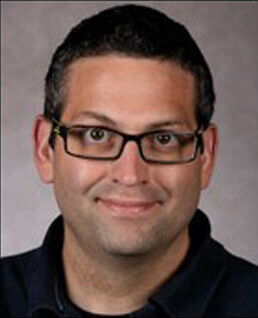
Vincent Cicchirillo
Associate Professor
Phone: 773-298-3633
Email: cicchirillo@sxu.edu

Paris Davis
Adjunct Faculty
Phone:
Email: pdavis@sxu.edu

Indranil Ghosh
Dean
Phone: 773-341-5015
Email: ghosh@sxu.edu
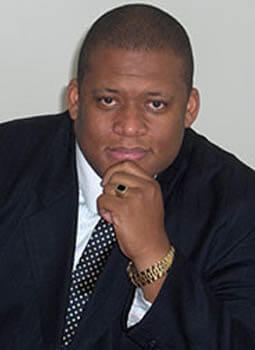
Brian Hill
Associate Professor
Phone: 773-298-3680
Email: bhill@sxu.edu
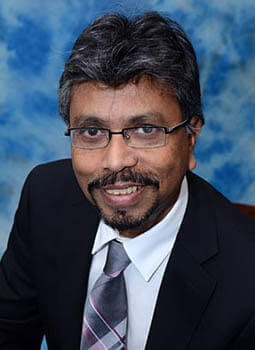
Monzurul Hoque
Professor
Phone: 773-298-3616
Email: hoque@sxu.edu
Alexander King
Assoc Prof/BBA Director
Phone: 773-298-3632
Email: aking@sxu.edu

Cheryl Luczak
Associate Professor
Phone: 773-341-5014
Email: luczak@sxu.edu

Hamid Mohammadi
Professor
Phone: 773-298-3621
Email: mohammadi@sxu.edu

David Parker
Associate Professor
Phone: 773-298-3664
Email: dparker@sxu.edu

Chris Perez
Director of MBA Program
Phone: 773-298-3605
Email: jcperez@sxu.edu

Faisal Rahman
Professor
Phone: 773-298-3606
Email: rahman@sxu.edu